
What does an experienced team still need to learn?

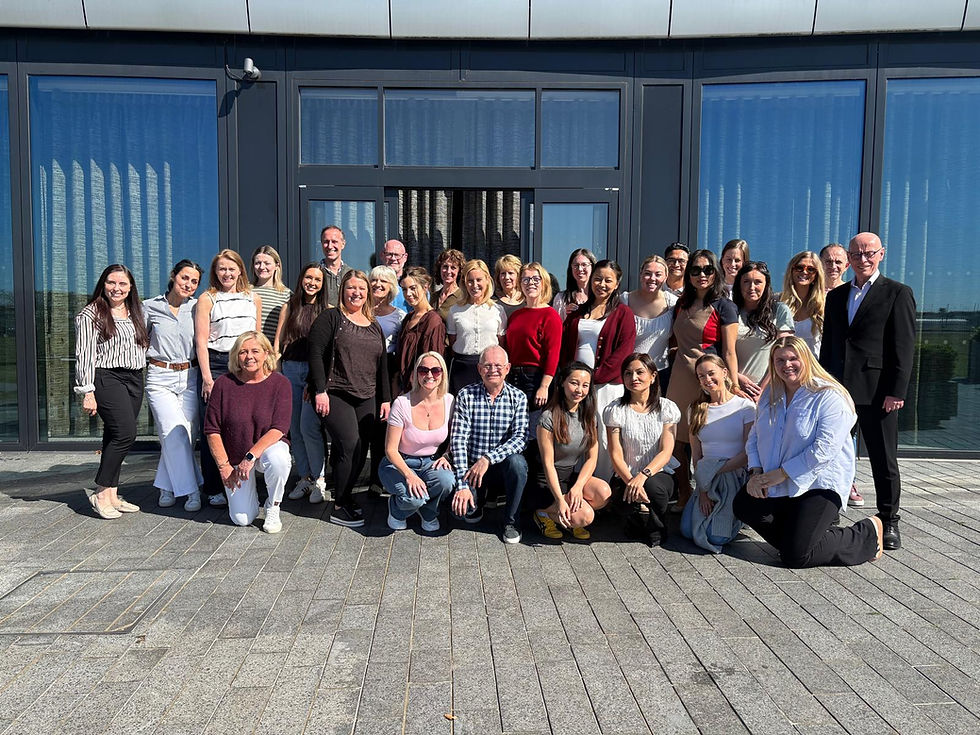
On Saturday I spent the day with the team at Elmsleigh House Dental Clinic, Farnham, Surrey - clients of mine since the late 1990s and, without question, one of the true Champions League independent practices in UK dentistry.
So the obvious question is this: when a team has already been successful for that long, what exactly is left to learn?
Quite a lot, as it turns out.
The day was never about fixing a broken business. Elmsleigh House is not broken. In fact, many of the foundations are exceptionally strong.
Financial control was described as “Marvel superpower” level, leadership is solid, and the practice remains in an enviable position in a market where NHS instability, corporate consolidation and economic uncertainty are making life uncomfortable for many others.
But this is The Campbell Academy Process© in action: excellence is not an event, it is a discipline. The best teams don’t assume that experience alone guarantees future success. They pause, reflect, recalibrate and improve.
That was exactly what Saturday was about.
We explored the difference between service and hospitality.
Service is what you do. Hospitality is how you make people feel.
In modern dentistry, that distinction matters enormously. A technically excellent clinical experience can still be undermined by a flat welcome, patchy communication or a front desk that feels more transactional than personal. A forgotten coffee cup, an unanswered call or a muddled handover can shout louder than a perfect composite.
From there, we worked through the six moments of truth in the patient journey: first digital contact, first human contact, consultation, treatment coordination, treatment plan presentation and end-of-treatment review.
These are not abstract marketing concepts. They are the daily reality of whether patients feel trust, clarity and confidence — or confusion. Elmsleigh’s opportunity is not to reinvent itself, but to tighten, polish and systemise each of those moments so that excellence becomes more consistent and less dependent on chance.
One of the most exciting conversations of the day focused on digital workflow. The combination of Loom, Gamma and AI has the potential to compress treatment plan turnaround from days to under 24 hours.
That is not technology for technology’s sake. It is practical, patient-friendly communication. Record the consultation, create a clear visual treatment plan, sense-check it like an adult, then send it promptly. Simple. Well, simple once everyone stops panicking at the sight of a new app.
We also looked at what happens next, because a good workshop without follow-through is just an expensive lunch.
Immediate priorities included trialling Loom videos, configuring Gamma, upgrading telephony, systemising end-of-treatment review, improving AI confidence across the team and launching a more intentional Google reviews programme, with a target of moving from around 157 reviews towards 500.
So what does an experienced team still need to learn?
To stay curious. To embrace change without losing humanity. To replace good intentions with repeatable systems. And to remember that the patient journey is never finished — it is always being refined.
That is the real work.
And Elmsleigh House, to their credit, are still willing to do it.


Comments